
|
|
COURSEWORK:
SUBJECTS:
SECTIONS:
|
Coursework ReferencesIncluding references to books and websites can score you research marks. If you look things up, you must say what it is and where it came from. If not, your coursework could be withdrawn.Quoting Research SourcesIt is an expectation that any sources you have used – such as information or images from textbooks, websites, etc. – are clearly indicated in your coursework. You can write this directly into your report, for example:
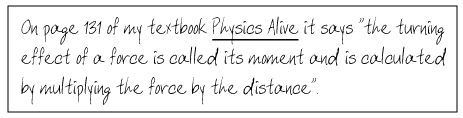 ... which is perfectly fine. However, there are a number of standard ways of stating where you found out information from (the technical term is "citing". Saying where you got it from is called a "citation"). One of the most popular of these is the Modern Language Association (MLA) Style. The MLA Style involves giving a brief credit inside brackets at the point in your report where you have used the information. Further details of the source are then given in a Bibliography at the end of your report. e.g. When citing from a reputable website, you should include the full internet address of the page used. In your report:
 In your Bibliography:
 e.g. If citing from a printed source, it is expected that you will include a page reference, as well as the title of the book and the author. In your report:
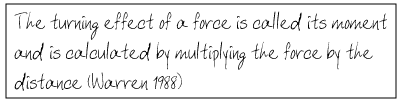 In your Bibliography:
 The MLA Style gives the following information, exactly as shown: Using FootnotesAnother simple technique is to use numbered footnotes that get listed separately at the bottom of the page in which the reference is made. This is easy to do in programs like MS Word and is sometimes more useful than a bibliography on the back page, as markers don't need to search for the reference. Of course, it doesn't matter one bit how you do it - just don't forget to make some sort of reference! After all, you will have to sign to say it's all your own work. Sometimes it can be obvious you've used someone else's work and this bad form could put your work in jeopardy. |
SPONSORS: GCSE online tutoring
| ||
| © 2005-2016 A P Harmsworth. All rights reserved. E&OE. Bookmark. Advertise. Top^^ | ||||